Shower & Bathroom Leak Detection in Belleville, NJ

Pinpointing shower pan failures, mixing valve defects, and drain leaks without tearing apart custom tile. Talk with a local leak specialist.

Precision Bathroom & Shower Leak Detection in Belleville, NJ

Water stains appearing on a first-floor living room or kitchen ceiling are one of the most frustrating problems for homeowners in Belleville. In classic two-family multi-generational homes throughout the Soho section and near the Belleville Park area, bathrooms are situated directly over finished dining and living areas. Tearing out expensive ceramic tile or custom shower enclosures based on a guess is costly and avoidable.

Our dedicated shower leak detection Belleville NJ diagnostics differentiate between simple cosmetic tile grout degradation and hidden mechanical plumbing failures. Whether you need comprehensive bathroom leak detection Belleville specialists provide, suspect a compromised shower pan leak Belleville installations frequently suffer, or are investigating a leaking tub drain Belleville homeowner issue, our non-invasive testing pinpoints the exact culprit.
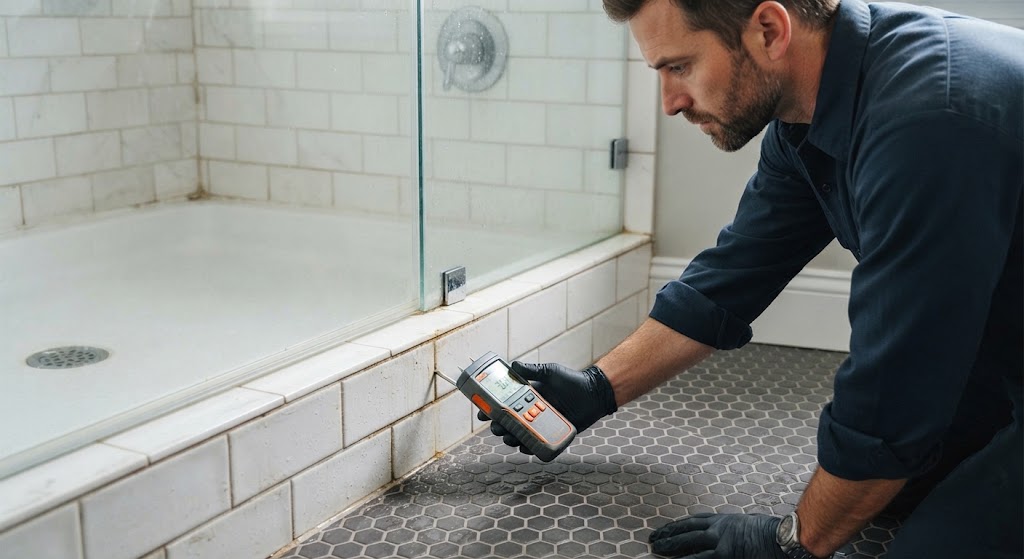
Shower and bathroom leak detection in Belleville NJ testing shower pan and drain assembly

Signs of a Concealed Bathroom Leak

Bathroom leaks can originate from pressurized supply lines, gravity drains, or waterproofing membranes. Watch for these diagnostic symptoms:

Ceiling Stains Under Bathrooms

Brownish water rings, bubbled drywall paint, or sagging plaster directly below an upstairs bathroom indicate that moisture is escaping and tracking along ceiling joists.

Spongy or Buckled Bathroom Flooring

Subflooring that feels soft around the base of the toilet or outside the shower curb indicates chronic moisture rot caused by a leaking wax seal or shower liner.

Loose or Hollow Tiles

When sub-pan water or failing shower grout saturates cement backer board, tiles lose their adhesive bond, sounding hollow when tapped and shifting underfoot.

Water Stains Only When Showering

If water appears downstairs strictly during or immediately after a shower is used, the issue is isolated to the shower pan, drain strainer assembly, or riser valve.

Continuous Drips Regardless of Usage

If water drips constantly day and night into the ceiling below, the leak is located on the pressurized domestic supply pipe or shower valve cartridge body.

Musty Odors and Peeling Baseboards

Persistent damp smells inside adjacent hallway closets or peeling trim paint next to the bathroom door signal moisture traveling behind walls.

Seeing water stains on the ceiling below your bathroom?

Find out whether it is tile grout, a drain, or a pressurized pipe before cutting. Call our team today.

Call (201) 510-1615

Common Causes of Bathroom Leaks in Belleville Homes

Bathroom plumbing systems in Essex County undergo significant wear and tear:

  • Failed Shower Pan Waterproofing: In older renovated showers, traditional copper or PVC shower liners degrade around clamping drain rings, allowing pooling water to seep into subflooring.
  • Cracked Tub Drain Strainers & Waste Overflow: Mechanical movement and weight flexing during baths strain slip-joint washers on tub waste-and-overflow assemblies, causing leaks during draining.
  • Deteriorated Toilet Wax Rings: Shifting floorboards cause toilets to rock, breaking the airtight wax seal and allowing wastewater to escape beneath the base during every flush.
  • Aging Shower Diverter Valve Cartridges: Wear within in-wall mixer valve castings allows pressurized water to spray inside the wall cavity whenever the shower head is engaged.

Safety & Structural Warning

Structural & Electrical Safety: Water leaking through second-floor bathrooms often pools on top of first-floor ceiling electrical fixtures. If light fixtures flicker or water drips through a light socket, immediately turn off the breaker to that room. Do not touch wet switches. We strictly diagnose and pinpoint water supply and drain leaks.

Our Step-by-Step Bathroom Diagnostic Process

Step 1: Calibrated Shower Pan Flood Testing

We insert an inflatable mechanical test plug into the shower drain throat and fill the pan with several inches of standing water without running the valve. If water levels drop, the shower pan membrane or clamping ring is compromised.

Step 2: Waste & Drain Flow Isolation

We systematically run water directly down the tub and shower drain via a bypass hose, bypassing tile surfaces completely. This isolates whether the failure is in the trap or drain pipe.

Step 3: Pressurized Shower Valve & Riser Testing

We cap the shower arm and pressurize the in-wall riser pipe to verify if the leak is occurring inside the wall cavity between the diverter valve and the shower head.

Step 4: Infrared Thermal Imaging & Moisture Profiling

High-resolution thermal imaging inspects the ceiling below, tracking moisture boundaries in real time as different fixtures are tested to verify the exact entry point.

What Happens After the Bathroom Leak is Located?

Once the exact source of water penetration is identified, your contractor can execute targeted repairs without guessing:

  • Shower Valve Rebuilding or Replacement: Replacing internal valve cartridges or accessing the valve body from the back wall (often a closet) preserves custom front tile work.
  • Tub Drain & Waste Overflow Repair: Replacing aged brass or PVC slip joints from an access panel or targeted ceiling opening below.
  • Toilet Flange & Wax Seal Reset: Removing the toilet, replacing a corroded closet flange, and installing a reinforced wax ring with horn to create a secure seal.
  • Targeted Shower Pan Remediation: If the membrane is failed, targeted shower base rebuilding avoids unnecessary demolition of wall tiles.

All plumbing connections must be serviced by a New Jersey licensed master plumber.

Cost Factors in Bathroom Leak Repair

Repair costs are governed by fixture location and accessibility:

  • Rear Wall Accessibility: Accessing a leaky shower valve through a drywall closet behind the shower is far less costly than tearing through custom tile work.
  • Drain Trap Complexity: Tub drains readily accessible from an unfinished basement ceiling require much less labor than drains sandwiched inside tight finished ceiling cavities.
  • Subfloor Wood Remediation: Early detection prevents rotten floor joists that require costly structural sistering and subfloor replacement.

Bathroom Leak Prevention Best Practices

Maintain watertight bathroom fixtures with these measures:

  • Maintain Perimeter Silicone Caulking: Inspect tub and shower seams annually; replace shrinking, cracked, or moldy caulking along floor joints and corners.
  • Check Toilet Stability: If a toilet rocks slightly when sat upon, tighten flange bolts immediately or shim the base to prevent wax seal rupture.
  • Avoid Chemical Drain Cleaners: Corrosive acid cleaners generate intense heat that weakens thin-walled brass tub drain traps and plastic slip joints.

When a Bathroom Leak is an Emergency

If ceiling drywall is bowing heavily with trapped water, or water is pouring through light fixtures below, take immediate action:

  1. Shut off water supply to the bathroom fixture or close the main house shut-off valve.
  2. Switch off electrical breakers for the downstairs ceiling lights immediately.
  3. Carefully place a bucket beneath the lowest point and puncture the sagging paint blister with a nail to relieve weight and prevent ceiling collapse.

Visit our dedicated emergency leak repair resource for comprehensive emergency steps.

Common Neighborhoods & Frequently Asked Questions

Second-story bathroom leaks causing first-floor ceiling damage are exceptionally frequent in two-family residences throughout the Soho section and across Silver Lake.

How can you tell if a leak is from a shower pan or bad tile grout?

We conduct a static shower pan flood test by plugging the drain and filling the base with standing water without splashing walls. If water leaks through to the floor below, the pan liner or drain collar is defective. If it only leaks when water sprays on the walls, grout or caulk failure is the cause.

Will you have to break my bathroom tile to locate the leak?

No. Our detection equipment relies on infrared thermal cameras, electronic moisture meters, and hydrostatic drain plugs. We isolate the problem without damaging tile surfaces.

Why does my ceiling only leak when someone takes a bath or shower?

Intermittent leaks that occur strictly during bathing indicate a gravity-side failure, such as a leaking tub waste-and-overflow, cracked drain strainer, or failing shower pan membrane, rather than a continuous pressurized supply pipe.

Related Leak Detection Services

Suspecting water is traveling inside wall cavities? View our hidden water leak detection. For basement water diagnostics, see basement leak detection, or return to our homepage for leak detection in Belleville and view our regional service areas.

Call (201) 510-1615
Call (201) 510-1615