Emergency Leak Repair in Belleville, NJ

Fast diagnostic help for burst pipes, active ceiling leaks, and uncontrollable flooding. Serving Silver Lake, Belleville Park area, and surrounding neighborhoods.

Rapid Diagnostic Assistance for Emergency Leaks in Belleville

When pressurized water is actively pouring through a ceiling, spraying from a wall cavity, or flooding a basement floor, every passing minute causes thousands in structural finish damage. In Belleville, multi-family homes in Silver Lake and single-family residences near the Belleville Park area feature compact plumbing networks where water rapidly migrates between levels.

When you encounter an urgent emergency leak repair Belleville NJ crisis, quick action is vital. Our team delivers rapid diagnostic guidance for emergency leak detection Belleville properties demand, helping you stabilize burst pipe emergency Belleville events and resolve high-risk water leak emergency Belleville NJ situations with minimal property loss.
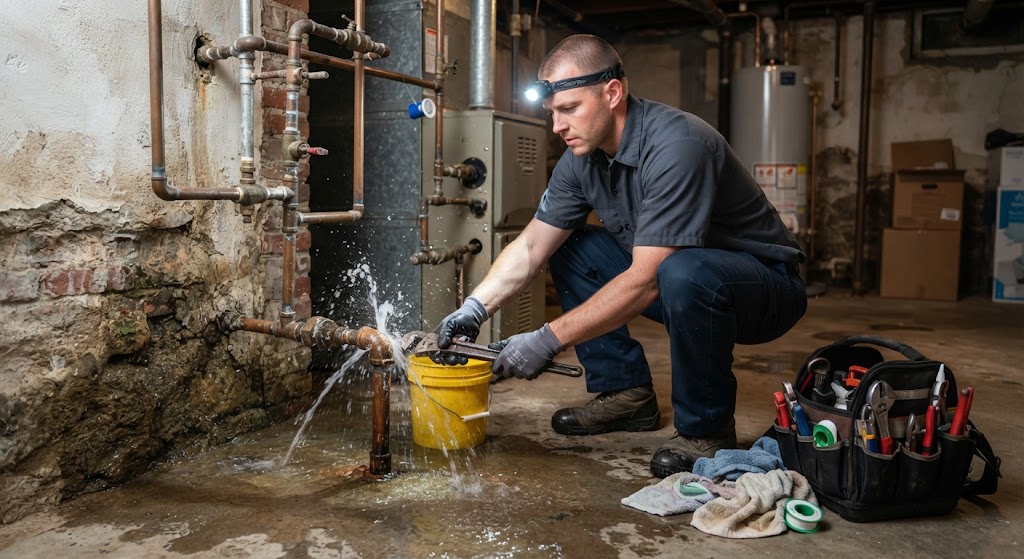
Emergency leak repair in Belleville NJ technician quickly responding to active burst pipe leak

Immediate Safety Steps: What to Do First

If you are facing an active, out-of-control water leak right now, follow these critical safety procedures before doing anything else:

1. Shut Off the Main Water Valve

Locate the primary water shut-off valve where the water line enters your basement foundation from the street. Turn the lever clockwise a quarter turn (or wheel valve clockwise until tight) to stop incoming flow.

2. Cut Electrical Power to Wet Areas

If water is near electrical outlets, appliances, or dripping through light fixtures, head to your circuit breaker panel. Shut off breakers controlling those rooms only if the panel area is dry.

3. Relieve Trapped Ceiling Water & Move Items

Place buckets under sagging ceiling paint blisters and carefully puncture the center with a screwdriver to release water weight before plaster collapses. Move furniture and rugs out of the water path.

Facing an active water leak emergency right now?

Follow the shut-off steps above, then call our Belleville specialists immediately for diagnostic response.

Call (201) 510-1615

Common Causes of Emergency Plumbing Leaks in Belleville

Catastrophic plumbing failures in Essex County frequently result from acute mechanical stresses:

  • Sub-Zero Freeze-and-Burst Cycles: During prolonged New Jersey winter cold spells, water inside uninsulated pipes near outside walls freezes into ice plugs. Trapped hydraulic pressure between the ice and closed valves exceeds 3,000 PSI, bursting copper tubing.
  • Sudden Failure of Corroded Galvanized Nipples: Heavily oxidized galvanized fittings beneath boilers or sinks suddenly snap under normal household water hammer.
  • Water Heater Tank Seam Ruptures: Aging water heaters past their service life suffer bottom weld failure, instantly dumping 40 to 50 gallons of water across basement floors.
  • Washing Machine & Supply Hose Blowouts: Standard rubber braided hoses swell and burst under continuous static pressure when shut-off valves are left open.

Crucial Gas Safety Advisory

Natural Gas Emergency Rule: Boiler and furnace utility areas contain both high-pressure water lines and gas feeds. If you smell gas, sulfur, or rotten eggs during a plumbing flood, evacuate the building immediately! Do not flip switches or operate phones inside. Call 911 or your gas utility from outdoors. We exclusively locate and diagnose potable water leaks.

Our Rapid Emergency Diagnostic Process

Step 1: Rapid Zone Isolation

Our technicians quickly isolate branch valves to determine whether the rupture is situated on domestic hot or cold supply, boiler heating loops, or drainage systems, restoring partial water to unaffected zones where possible.

Step 2: Thermal Infrared Water Tracking

Infrared imaging instantly scans wet ceilings, walls, and subfloors, displaying moisture heat signatures that point directly back to the physical pipe split behind finishes.

Step 3: Acoustic Fissure Localization

Acoustic sensors listen for high-frequency water turbulence along pressurized conduits to pinpoint the exact wall stud bay or floor joist containing the rupture.

Step 4: Insurance Documentation Mapping

We document moisture readings, thermal imaging records, and pipe coordinates, providing clear photographic evidence to support your homeowner insurance claim submission.

What Happens After the Burst Pipe is Located?

Once the active breach is pinpointed and isolated, strategic emergency repairs can proceed rapidly:

  • Targeted Section Replacement: Cutting out the fractured copper segment and sweating in new type L copper or crimping PEX using approved mechanical transition couplings.
  • Temporary Mechanical Clamping: In multi-unit buildings where full shut-down is restricted, high-pressure emergency repair sleeves stabilize the line while permanent replacement is prepared.
  • Defective Fixture Isolation: Capping damaged branch lines so water service can be safely restored to the rest of the household while repairs are finished.

Permanent plumbing repairs in New Jersey must be performed by a licensed master plumber.

Cost Factors in Emergency Repair Situations

Emergency repair expenditures depend on specific practical variables:

  • Speed of Water Shut-Off: Shutting off the main water valve immediately prevents extensive structural drying, mold remediation, and subfloor rebuilding costs.
  • Accessibility of the Ruptured Pipe: Pipes situated in open basement joists require significantly less labor to access than lines buried beneath tiled bathroom floors or behind exterior brick veneers.
  • Material Condition: If an entire galvanized branch has failed due to severe oxidation, replacing the complete line is necessary to prevent recurring blowouts.

Preventing Future Pipe Blowouts

Proactive winterization prevents catastrophic winter pipe ruptures:

  • Disconnect Garden Hoses in Autumn: Leaving outdoor hoses attached traps water inside the exterior sillcock, bursting the indoor pipe during freezing weather.
  • Keep Thermostats at 55°F Minimum: Never let interior heat drop below 55 degrees when traveling during New Jersey winter months.
  • Open Cabinet Doors During Freezing Snaps: Allow warm interior room air to circulate around plumbing pipes located on cold exterior walls.

Identifying Immediate Emergency Situations

An emergency leak exists whenever escaping water cannot be controlled by a local shut-off valve, is contacting electrical infrastructure, or is actively eroding foundation soils. In these scenarios, immediate diagnostic pinpointing limits devastating collateral damage.

For non-emergency underground line issues, learn about our water line leak detection service.

Common Neighborhoods & Frequently Asked Questions

Winter burst pipe emergencies are especially common in older homes across the Washington Avenue corridor and uninsulated attic crawl spaces near Belleville Park area.

Where is my main water shut-off valve located?

In most Belleville residences, the main water shut-off valve is located in the basement near the front foundation wall where the municipal water service line enters the house, typically right before or after the water meter.

Does homeowner insurance cover burst pipes and leak detection?

Most standard homeowner insurance policies cover sudden and accidental water damage caused by burst pipes, as well as the cost of tearing out and replacing walls to access the leak. We provide comprehensive diagnostic documentation to support your claim.

What should I do if my ceiling is bulging with water?

First, shut off your main water valve and turn off electricity to the room. Place a bucket underneath the bulge, and carefully puncture the center of the blister with a screwdriver to release water weight gradually before the ceiling collapses.

Related Leak Detection Solutions

Looking for post-emergency pipe fixes? View pipe leak repair. If you have hidden moisture behind finished walls, see hidden water leak detection, or return to our homepage for leak detection in Belleville and view our regional service areas.

Call (201) 510-1615
Call (201) 510-1615